In 2004, when I pastored a fundamentalist church in Michigan, I stood before my congregation and said something to this effect, “Regardless of what party you belong to or how you normally vote, I think we can all agree as Christians that the Bible clearly teaches that marriage is between one man and one woman. I want to encourage you to sign the petition in the welcome area of our church to get the defense of marriage amendment to the Michigan state constitution on the ballot in November. I also want to encourage you to vote for that amendment in November.”
I collected signatures. I voted “yes” and urged others to do the same. The measure passed with nearly 60% of the vote ... and 8 years later, I repent.
I was wrong when I said that the Bible clearly teaches a traditional definition of marriage. I was wrong to be insensitive to the lives and struggles of gay and lesbian people. I was wrong for perpetuating state oppression of a group of citizens. I was wrong and I repent.
The Bible and Marriage
I have come to recognize that reading and understanding the Bible isn’t nearly as easy as I was taught it was in Bible college. The older I get, the more I recognize that simply applying a few hermeneutical tools to a passage isn’t necessarily going to give me a crystal clear interpretation of what God definitely wants for my life and the lives of others. It can be difficult sometimes to know when the Bible is being descriptive, simply describing the way things were, and when the Bible is being prescriptive, prescribing the ways things ought to be. Is Paul’s use of husbands and wives as an analogy for Christ’s love for us descriptive of most marriages in his time or prescriptive of what marriage should be always and forever?
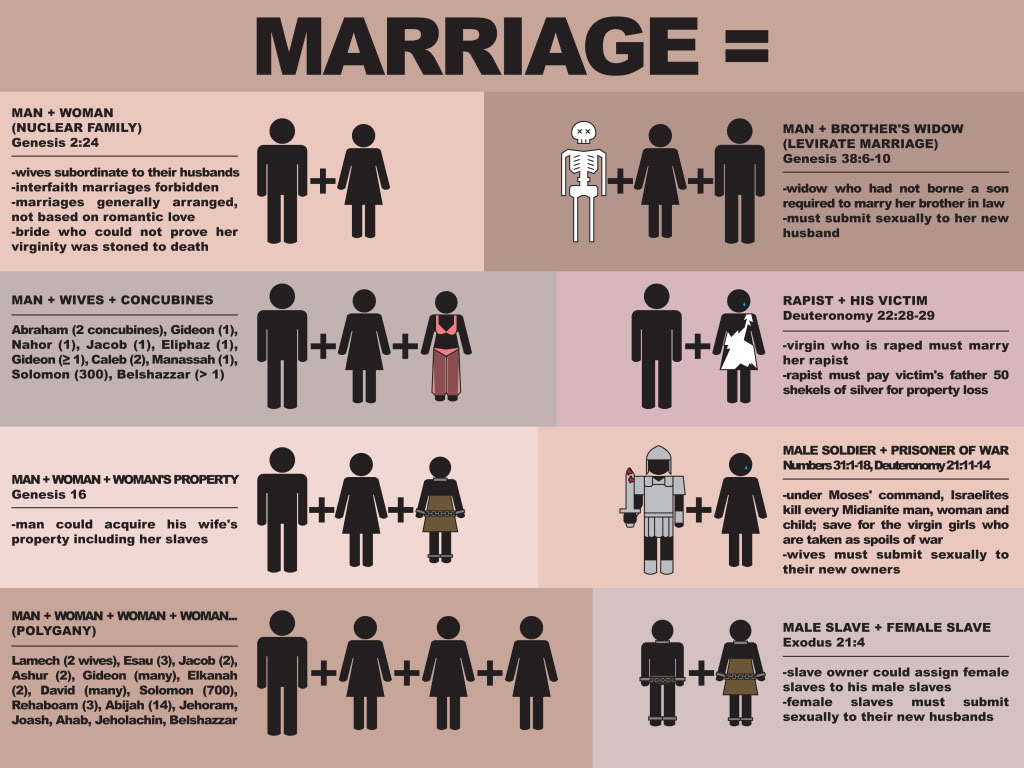
In the debate about same sex marriage, much has been made about the definition of marriage. Does the Bible actually define marriage or does the Bible simply describe what has been most common, though not exclusively, in human history? People on the traditional marriage side of the debate often argue that they want to preserve the traditional definition of marriage. But isn’t it pretty commonly accepted that the definitions of words evolve? Language is living and dynamic. Shouldn’t our theology be as well?
Further, even if one argues that Bible “clearly” teaches that homosexuality is a sin, does that mean that in a pluralistic society people who engage in such behavior should have certain legal rights or privileges revoked or limited? The Bible “clearly” teaches that gluttony is a sin. Parents who are gluttonous often raise their children to be gluttonous. Should fat people have their right to become parents be revoked because they are engaging in sinful behavior?
Even further, just because I accept the Bible as authoritative for my life, does that give me the right to expect others to do the same? If I believe that the Bible “clearly” teaches that I should not cheat on my wife, should it then become a crime for all people to cheat on their spouses? In a pluralistic society, which ours is, can we really appeal to prooftexts from the Bible as the standard for what our civil laws ought to be?
Gay and Lesbian Friends
In 2004, I didn’t really have any gay or lesbian friends, that I knew of anyway. My world, and therefore my perspective, was very cloistered. I had not listened to the stories of LGBT people. I had not heard their perspective and didn’t care much about what their lives were like. I was insensitive to the struggles, pain, and heartache they have faced at the hands of pastors like me, churches like mine, and the culture I sought to preserve.
I am a white, straight American male. I have all the power, all the privilege. I don’t know what it is like to be an outcast. I don’t know what it’s like to be bullied for something over which I have no control. I don’t know what it is like to be excluded or shunned. I don’t have any idea what it’s like to live in a society that codifies my inequality.
I now know differently. Well, I don’t really know in any experiential sense, but I have a better idea. And that has changed my perspective. I realize now that those in the LGBT community are people, not the butts of jokes or political enemies advancing an agenda. As a follower of Jesus, I believe that people, all people, are to be loved, not made fun of, bullied, opposed, or ignored. I also have come to believe that my comfort with a particular version of our culture is not more important than the people who live in our culture. The victory of my political party is not more important than people. My sense of right and wrong is not more important than people. Nothing is more important than people.
God Is On the Side of the Oppressed
I now read the Bible much differently. I see it not as a collection of prooftexts to bolster my arguments, but as a story, a story in which I find both God and myself. The narrative of the Bible presents a God who is on the side of the oppressed. God watches out for those who have been forgotten, for those who have been discarded, for those who have been rejected.
God heard a banished maidservant crying and delivered her and her rejected son.
God provided sanctuary for the illegal alien within the Jewish legal system.
Jesus touched the untouchable outcasts.
Jesus talked to and spoke up for the shunned and judged.
The church is home for the lowly, the despised, the have-nots.
The church is a family for those with no family.
The kingdom will be made up of people from every walk of life.
The kingdom will be for all.
Who today is rejected, outcast, and condemned?
Who today is without a family?
Who today is discarded and forgotten?
Certainly, we could answer these questions with a laundry list of Christian cause celebes: Orphaned children in Africa. Victims of sex trafficking. The unborn. But couldn’t we answer these questions with LGBT people as well? Haven’t they been rejected, outcast, and condemned as well? If so, doesn’t that mean that God is on their side as well? And if God is on their side, shouldn’t I be as well?
I Repent
And so, I repent. I repent of seeking to preserve a culture I was comfortable with at the expense of love for people. I repent for putting my theological and political heritage ahead of grace. I repent for perpetuating a church culture of oppression.
I repent.
From here on out, I will speak up for the rights and privileges of all people.
I will speak up and vote for the dignity of all people.
I will seek to befriend and love those whom in the past I had rejected.
I will seek love and grace for the sake of Jesus and his kingdom.
.

